Roof damage often begins in areas that are difficult to see from ground level.
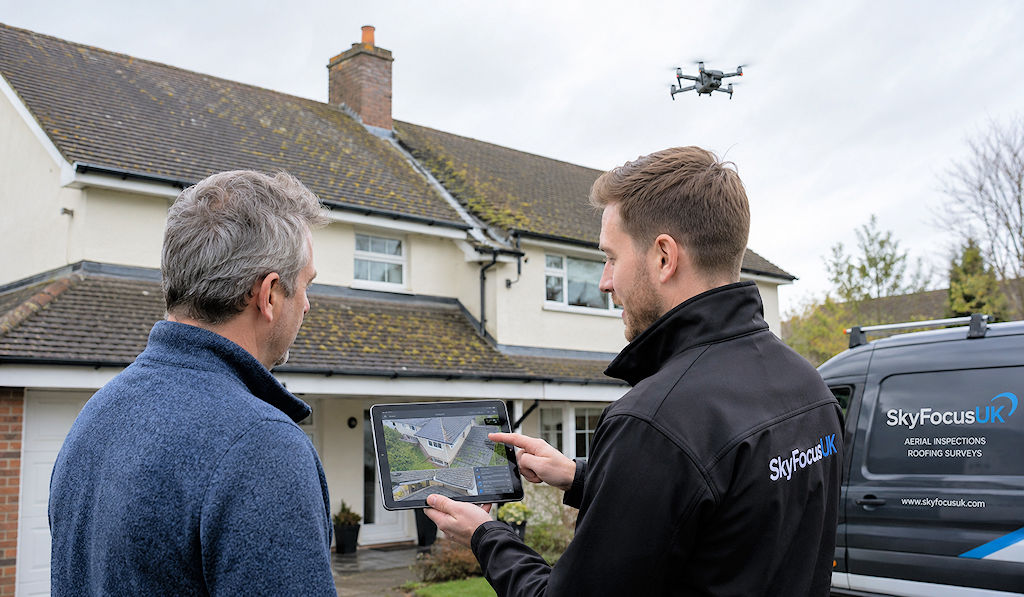
Loose or missing tiles, damaged flashing, cracked chimney stacks and deteriorated roof edges can allow rainwater to enter the property and cause further damage to insulation, ceilings, timbers and internal decoration. A professional drone property inspection provides a safe and effective way to examine these high-level areas without immediately requiring ladders, scaffolding or access platforms.
High-resolution aerial photographs and video can reveal visible defects from several angles, helping homeowners understand the condition of their roof before arranging repairs. Drone inspections are particularly useful after strong winds, storms or heavy rainfall, when tiles, aerials, gutters and chimney components may have moved or become damaged.
A professional drone inspection gives homeowners a clear view of roof damage that may otherwise remain hidden until it develops into a more expensive problem.
SkyFocusUK – Property Imagery and Video
Loose, cracked or slipped roof tiles are among the most common issues identified during an aerial inspection. A drone can also examine ridge and hip tiles, valleys, flashing around chimneys and roof windows, blocked guttering and areas where the roofing membrane may be exposed. Identifying these visible problems early can help reduce the risk of water ingress and structural deterioration.
Gable ends, chimney stacks, TV aerials and satellite equipment are also vulnerable to weather damage. Drone imagery can reveal cracked render, deteriorated mortar, loose verge tiles, damaged chimney pots, unstable aerial brackets and displaced cables. It can also provide a clear view of moss growth, blocked drainage outlets and previous repairs that may be incomplete or poorly finished.
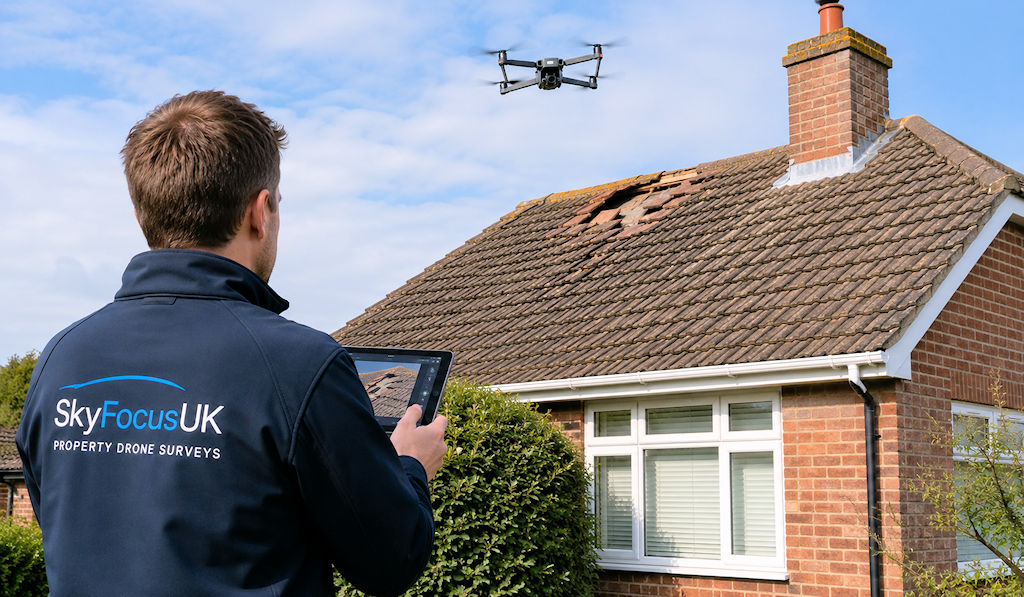
A drone inspection does not replace a hands-on assessment where one is required, but it provides an excellent first step towards understanding the visible condition of the property. The resulting imagery can be shared with roofing contractors, property managers or insurers, helping them locate the affected areas, prepare more informed quotations and plan suitable repairs.
For homeowners, this means clearer evidence, safer inspections and the opportunity to address minor defects before they become costly problems.